
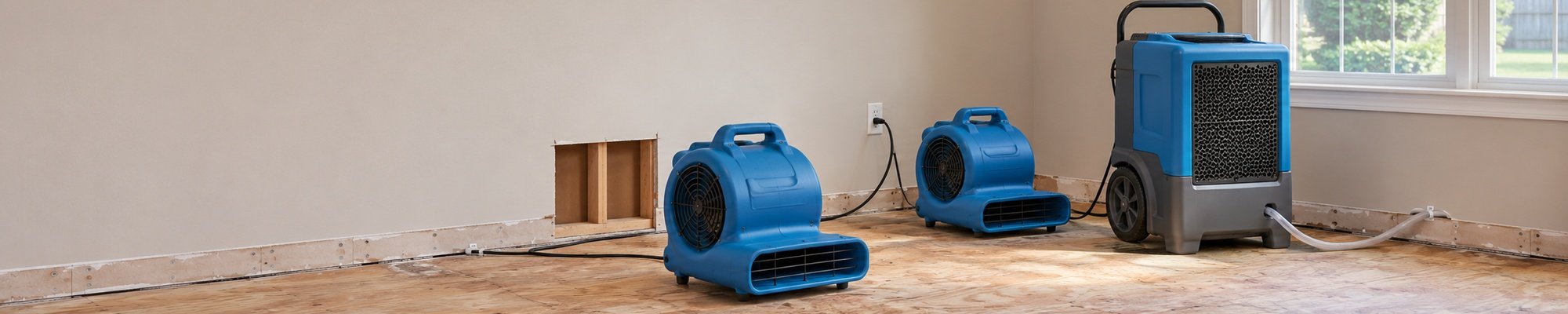
180 Degree Floors handles water damage in Nashville, Murfreesboro, and Franklin in one sequence: stop the source, extract the water, dry with commercial air movers and dehumidifiers, test for hidden moisture, then rebuild the floor. We are an IICRC Certified Firm (#70262351) and have served Middle Tennessee since November 2008. Free estimate: (615) 788-1379.
At a glance
- Services — Water extraction, structural drying, moisture testing, dehumidification, flooring removal and replacement after water damage
- Who we serve — Homes, hotels, schools, retail spaces
- Service area — Nashville, Murfreesboro, Franklin, Middle Tennessee
- Credential — IICRC Certified Firm #70262351
- In business since — November 2008
- Estimate — Free — call (615) 788-1379
What should I do first after a flood or burst pipe?
Stop the water if you can do so safely, then call a plumber to fix the source before drying begins. Our process starts with extraction, not new flooring, so the source is controlled first. Call (615) 788-1379.
That order is the whole job in miniature. Everything below follows it: source, extraction, drying, testing, rebuild.
What does water damage restoration actually include?
- Water Extraction — Removal of standing water after a leak, burst pipe, or flood, before drying begins.
- Structural Drying — Commercial air movers and dehumidifiers to dry floors, walls, and subfloors.
- Moisture Testing / Hidden-Moisture Check — Pin and pinless meter readings in wood, drywall, and subfloors, so hidden moisture is found before new floors go in.
- Dehumidification — Dehumidifiers to bring indoor humidity and materials back down during drying.
- Flooring Removal After Water Damage — Removal of wet, damaged flooring and underlayment ahead of rebuild.
- Flooring Replacement After Water Damage — LVP, hardwood, tile, and carpet installed to rebuild floors after drying is complete.
- Water Damage Assessment — An on-site look at wet areas, what is damaged, and what drying and rebuild work is needed, with a free estimate.
How does a water mitigation and rebuild job work, step by step?
- Stop the source. If you safely can, stop the water. Call a plumber to fix the source.
- Extract. Standing water is removed first.
- Dry. Air movers and dehumidifiers are placed based on a moisture map of what is actually wet, including adjoining rooms.
- Test. We take repeated moisture readings across floors, walls, and subfloors. Drying is finished when readings show materials are dry — not just when the surface feels dry.
- Remove what cannot be restored. Damaged material is documented and removed.
- Rebuild. LVP, hardwood, tile, or carpet is installed to finish the floor.
Drying only vs. drying + rebuild vs. doing it yourself
- Drying only — Water is extracted and the structure is dried and tested — You still need a flooring company for the rebuild
- Drying + rebuild with 180 Degree Floors — One team extracts, dries, tests, removes damaged flooring, and installs the new floor — Rebuild starts only after moisture readings confirm the subfloor is dry
- Household fans + a dehumidifier — Moves air and may help the surface feel dry — Without meter readings, you cannot confirm whether the subfloor or wall cavity is actually dry
Honest answers — what we will and will not promise
- Drying time: There is no honest one-size answer. It depends on how much water there was, what got wet, and how long it stayed wet.
- Saving wet hardwood: Sometimes it can be saved, sometimes it cannot. It depends on the wood, time wet, and cupping or buckling. We test first and tell you honestly.
- Insurance: We document drying and flooring work, including moisture readings and what was removed, dried, and replaced, for your records. Coverage and payment decisions are your insurer's, not ours.
- Sewage: We do not advertise sewage cleanup as a standalone service. Large or contaminated losses are assessed case by case before we agree to any scope.
- Mold: Our focus is drying and rebuild. If we see conditions that need a specialist assessment, we will advise you to get one.
Who we serve
Homes, hotels, schools, and retail spaces across Nashville, Murfreesboro, Franklin, and Middle Tennessee. Commercial work is phased and documented room by room, so unaffected areas are kept separate in the record.
About 180 Degree Floors
180 Degree Floors has served Middle Tennessee since November 2008, for homes, hotels, schools, and retail spaces. We are an IICRC Certified Firm (#70262351). We show moisture meter readings from real jobs rather than asking you to trust a claim — readings are proof, not a promise.
Get a free estimate
Call (615) 788-1379. Tell us where the water came from, how long it has been wet, and which rooms and flooring types are affected, if you know them — that helps us plan the assessment.